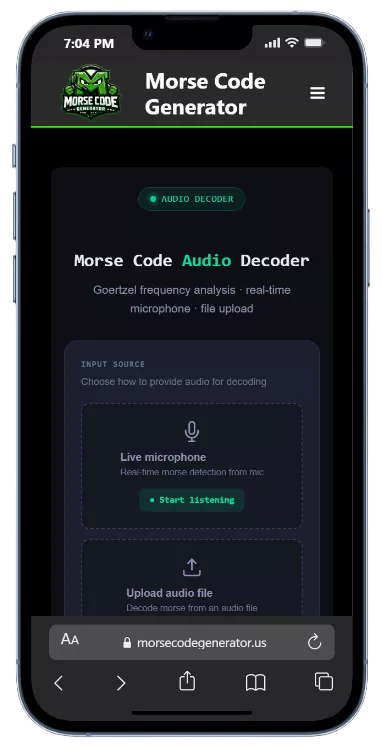
Morse Code Audio Decoder
Goertzel frequency analysis · real-time microphone · file upload
Morse Code Audio Decoder: How It Works, Why People Still Use It, and What You Should Know
Hearing a series of short and long beeps can feel oddly mysterious. Some people instantly recognize it as Morse code, while others just hear random sounds. That’s where a Morse Code Audio Decoder becomes useful. Instead of manually translating dots and dashes, the software listens to audio signals and converts them into readable text within seconds.
A lot of hobbyists, amateur radio operators, students, and cybersecurity enthusiasts use these tools every day. Some use them for learning. Others use them to decode old recordings, radio signals, or emergency communication practice sessions. A few people even experiment with Morse code just because it feels satisfying to understand a language built entirely from sound patterns.
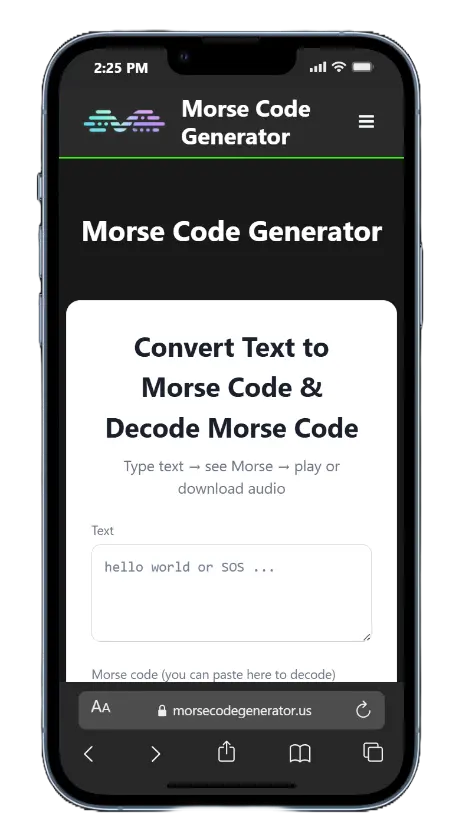
If you’ve already tried a morse code generator, then stepping into audio decoding feels like the next logical move. One creates Morse signals, while the other helps interpret them from sound files, live radio, or microphone input. People also combine these tools with a morse code image decoder when working with visual signals, blinking lights, or scanned telegraph notes. It sounds niche at first, but once you see how many formats Morse code can appear in, the ecosystem starts making sense.
And yes, before diving deeper, here’s a fun side note for parents and teachers: some learning websites that offer Morse tools also let you get 20+ dinosaur coloring pages for kids. It’s a random combo, honestly, but educational platforms tend to bundle all kinds of printable resources together.
What Is a Morse Code Audio Decoder?
A Morse Code Audio Decoder is a tool that listens to Morse code sounds and converts them into letters, numbers, and symbols. Instead of visually reading dots and dashes, the decoder analyzes audio frequencies and timing patterns.
Traditional Morse code relies on:
- Short sounds called dots
- Longer sounds called dashes
- Pauses between characters and words
- The decoder measures these sound lengths and gaps to determine what message is being sent.
- For example:
...= S---= O...= S- That famous SOS distress signal becomes recognizable almost instantly to decoding software.
- Modern Morse decoder tools can work with:
- MP3 files
- Live microphone input
- Ham radio transmissions
- WAV recordings
- CW (continuous wave) signals
- Some tools even perform real time Morse code decoding while a transmission is still happening.
Why Morse Code Audio Decoders Still Matter?
A lot of people assume Morse code disappeared decades ago. It didn’t. Pilots, radio operators, survivalists, historians, and military communication enthusiasts still interact with it regularly. Amateur radio communities especially keep it alive. There’s something oddly personal about sending messages through sound alone. Audio decoders help because manual decoding takes serious practice. Experienced operators can hear Morse tones and translate them mentally, but beginners usually struggle with timing.
That’s where a Morse signal decoder reduces frustration. You can load a sound clip, hit decode, and immediately compare what you heard against the translated text. It speeds up learning in a practical way. Some users also rely on a Morse code sound translator when radio interference makes signals difficult to understand. Software often catches patterns the human ear misses.
How a Morse Code Audio Decoder Works?
At its core, the process is based on audio signal analysis. The software listens for tone frequencies and measures duration. Once it identifies a consistent signal, it separates dots from dashes using timing ratios.
- A simplified process looks like this:
- Detect audio frequency
- Filter background noise
- Identify signal peaks
- Measure short and long tones
- Translate patterns into Morse symbols
- Convert symbols into readable text
A decent CW audio decoder can even adapt to different transmission speeds automatically. That part matters more than people realize. Morse code isn’t always sent at the same speed. Some operators send very slowly for beginners, while others transmit incredibly fast during contests or emergency drills. A strong automatic Morse decoder adjusts in real time instead of expecting perfect timing.
Features That Make a Good Morse Decoder Tool?
Not every decoder performs equally well. Some struggle the moment background noise appears. A reliable Morse Code Audio Decoder should include:
Noise Filtering
Real recordings aren’t clean. Wind noise, radio hiss, and microphone hum can interfere with decoding. Good software filters those distractions without destroying the signal itself.
Adjustable Speed Detection
Different operators transmit at different words-per-minute rates. Flexible timing recognition improves accuracy dramatically.
Live Decoding
Real time decoding lets users translate signals as they happen. This is especially useful during radio operation practice.
Frequency Tuning
Some Morse transmissions sit inside crowded frequency ranges. Manual tuning helps isolate the correct tone.
Export Options
Many people save decoded messages as text files for research, learning, or logging purposes. It’s a small feature, but surprisingly useful.
Tips for Better Morse Audio Decoding:
Use Clean Recordings
Background noise destroys accuracy quickly. If possible, record directly from the source instead of using external microphones.
Start Slow
Beginners often try fast transmissions immediately and get overwhelmed.
Slow practice signals train your ear more effectively.
Wear Headphones
Small timing differences become easier to hear. This sounds obvious, but it genuinely helps.
Learn Basic Patterns Manually
Even if software handles decoding, understanding common Morse symbols improves troubleshooting. When software makes mistakes, your ears can catch them.
Experiment With Different Tools
Some Morse code audio converter tools specialize in radio signals. Others handle prerecorded files better. Testing multiple decoders often gives better results than relying on one platform.
Pros and Cons of Using a Morse Code Audio Decoder
Pros
Cons
Final Thoughts
A Morse Code Audio Decoder does more than translate beeps into text. It bridges older communication methods with modern technology in a way that still feels practical today. Whether you’re decoding ham radio signals, learning CW communication, restoring historical recordings, or just experimenting out of curiosity, these tools make Morse code far more approachable.
The best part is that you don’t need expensive equipment to get started anymore.
A basic decoder, a sound file, and a little patience are usually enough. And once your brain starts recognizing patterns naturally, you may catch yourself hearing Morse rhythms everywhere. Some people even joke that microwave beeps start sounding suspicious after a while.