Can a Morse code generator also decode Morse Back to Text?
Morse code has a strange way of sticking around. It started with telegraphs in the 1800s, yet people still use it today for learning, puzzles, programming experiments, and even social media captions. Once you start exploring Morse tools online, a common question pops up quickly: Can a Morse code generator also decode Morse back to text?
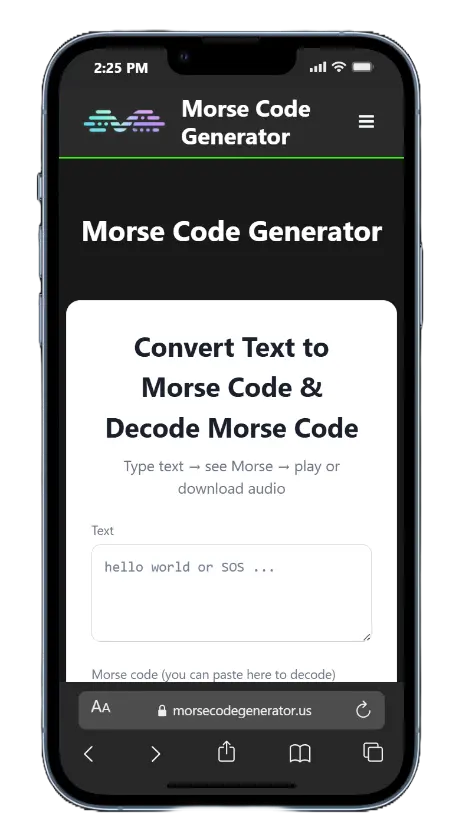
At first glance, many people think a generator only converts text into dots and dashes. That’s partly true, but modern tools usually go a step further. Many of them work both ways. They can encode messages into Morse code and also translate Morse signals back into readable text.
If you’ve ever copied a string of dots and dashes and wondered what it means, that’s where a decoding feature becomes useful. Understanding how a Morse code generator also decode functionality works can make the entire system easier and far more practical to use.
The Basics of Morse Code Conversion
Morse code works by assigning a pattern of dots and dashes to each letter and number. For example:
- A →
.- - B →
-... - C →
-.-.
When you type a message into a generator, it replaces each letter with its Morse equivalent. But many tools now act as a Morse Code translator, meaning they handle both encoding and decoding.
That’s why the question Can a Morse code generator also decode Morse back to text? usually has a simple answer: yes, most modern tools do exactly that.
A typical Morse code generator and decoder works like a two-way translator. It accepts text input and produces Morse code. Then it can read Morse patterns and turn them back into readable words.
A Simple Example of Encoding and Decoding
Imagine typing a short greeting into a converter. Many people experiment with phrases like how to say hi in morse code when they first learn about the system.
The word HI translates into Morse code like this:
- H →
.... - I →
..
So the encoded message becomes:
.... ..
Now, if you paste .... .. into a Morse decoder, it instantly converts back into HI.
This simple example shows how a Morse code generator also decode feature works in real life. The system reads each dot-dash pattern and matches it with the correct letter.
Why Two-Way Morse Code Tools Are So Useful
Years ago, people had to memorize Morse patterns or keep printed charts nearby. That worked fine for trained operators, but beginners struggled with longer messages.
Today’s tools solve that problem. A Morse code translator tool can decode entire sentences in seconds.
Here’s where a two-way Morse code converter becomes helpful:
- Students learning Morse code can test themselves.
- Puzzle creators can hide secret messages.
- Radio hobbyists can verify signals.
- Developers can integrate Morse decoding into apps.
Because of these uses, most modern platforms combine a text to Morse code converter with a Morse code to text converter in the same interface. That’s the reason people often search whether a Morse code generator also decode messages automatically.


How Morse Decoding Actually Works
Decoding Morse code is simpler than it sounds. Every Morse character follows a consistent pattern of dots and dashes.
A decoder usually follows a few basic steps:
- The tool reads the dot-dash sequence.
- It identifies the spacing between symbols.
- It compares each pattern with the Morse code chart.
- The corresponding letter appears in text form.
For example:
... --- ...
The decoder recognizes the pattern and converts it into SOS.
This process happens instantly in most Morse code decoding software. Even long messages can be translated almost immediately.
Morse Code Isn’t Just for Typing
One interesting thing about Morse code is that it doesn’t rely only on written symbols. Messages can also be sent using sound, tapping, or light.
You might have heard about blink in morse code, where short blinks represent dots and longer blinks represent dashes.
In this case, decoding becomes more complicated because software may need to interpret timing rather than typed symbols. Some advanced tools can even decode Morse signals from audio recordings or flashing lights. Still, most everyday generators focus on text-based decoding.
Even with these variations, the basic idea remains the same: a Morse code generator also decode patterns by matching them with the Morse alphabet.
Converting Text to Morse and Back
People often discover Morse code while trying to create encoded messages for games or online posts. Once they start experimenting, they naturally want to know how the reverse translation works. Guides like how do i convert text to morse code usually explain the encoding side first. But decoding works in the opposite direction.
Here’s a quick example:
Original text: HELLO
Morse code: .... . .-.. .-.. ---
Paste that Morse string into a decoder and the tool will return:
HELLO
Because of this simple two-way process, many platforms function as both a Morse code encoder and decoder. So if you’re wondering whether a Morse code generator also decode messages, the answer is that most of them already include that feature.
Common Features in Modern Morse Code Tools
Modern Morse tools are surprisingly versatile. Many include more than just basic conversion.
Typical features include:
1. Instant Two-Way Conversion
Most tools translate text into Morse and Morse back to text in real time.
2. Audio Playback
Some generators play Morse signals as beeping sounds, helping users learn timing patterns.
3. Flashlight or Light Signals
Certain apps simulate Morse code through visual flashing.
4. Copy and Share Options
Users can easily copy Morse messages for puzzles or social posts.
These features turn a simple converter into a full Morse code translation tool.
Advantages of a Morse Code Generator and Decoder
Using a tool that performs both encoding and decoding offers several benefits.
Faster Learning
Beginners can type Morse patterns and instantly check if they translated them correctly.
Easy Puzzle Creation
Game designers and teachers often hide Morse messages in riddles.
Better Communication Practice
Amateur radio operators sometimes decode signals during practice sessions.
Convenience
Instead of memorizing the entire Morse chart, users can rely on a quick translation tool. These advantages explain why people frequently ask whether a Morse code generator also decode signals.
Possible Limitations
Even though modern tools work well, they’re not perfect.
Spacing Errors
Incorrect spacing between Morse letters can confuse the decoder.
Unsupported Characters
Some symbols or punctuation marks may not translate properly.
Mixed Signals
If Morse code is typed incorrectly, the decoder might produce random letters. Because of this, it’s still helpful to understand the basic Morse alphabet when working with encoded messages.
Is Morse Code Case Sensitive?
A surprisingly common question appears when people experiment with translation tools: does capitalization matter?
Searches like <b>morse code is case sensitive</b> usually come from users testing uppercase and lowercase text.
The answer is simple: Morse code does not care about letter case.
These two inputs produce the same result:
HELLO
hello
Both convert to:
.... . .-.. .-.. ---
Because Morse code only represents characters, uppercase and lowercase letters share the same pattern.
Safety and Responsible Use
Using Morse code generators is generally harmless, but there are a few practical things to remember.
Use Trusted Tools
Stick with browser-based converters or reputable apps.
Avoid Unknown Downloads
Some websites offering Morse code decoding software may include unnecessary files.
Double-Check Important Messages
If you’re sending Morse signals in real-life scenarios such as flashlight communication—verify the translation carefully. Small mistakes can change the meaning of a message.
Why Morse Code Still Fascinates People
Even though Morse code originated with telegraphs, it hasn’t disappeared. It keeps showing up in unexpected places. Puzzle designers use it for hidden clues. Developers include it in coding projects. Survival enthusiasts teach it as a backup communication method.
The simplicity of dots and dashes makes it easy to learn, and modern tools make it even easier to experiment with. That’s why people keep searching whether a Morse code generator also decode signals. They’re discovering that this old communication system can still work with modern technology.
Final Thoughts
So, can a Morse code generator also decode Morse back to text? In most cases, yes. Many modern tools work as both encoders and decoders, allowing users to translate messages in either direction. You can type a sentence and turn it into dots and dashes. Then paste those same symbols into the decoder and recover the original text instantly.
Because of this two-way functionality, Morse tools have become far more practical than the old printed charts once used by telegraph operators. Understanding how a Morse code generator also decode messages opens the door to experimenting with secret messages, learning Morse patterns, or even building your own coding projects.
And once you see a string of dots and dashes transform into real words, it suddenly feels less like an old telegraph trick and more like a clever little language hiding in plain sight.