Is Morse Code Secure for Communication?
Morse code has been around for a long time. It’s simple, clever, and honestly kind of fascinating. You take plain text, turn it into dots and dashes, and suddenly it feels like a secret message. That’s probably why many people wonder: Is Morse code secure for communication, or is it just a cool way to encode text?
It’s a fair question. At first glance, Morse code looks like a coded system that only trained people can understand. But once you dig a little deeper, things start to look different. It’s not quite the secret language people imagine.
Let’s walk through how Morse code works, how secure it really is, and when it might (or might not) be a good choice.
Understanding Morse Code as a Communication System
Morse code is a way of representing letters and numbers using dots and dashes. That’s it. There’s no built-in encryption, no hidden layers just a different format of the same message.
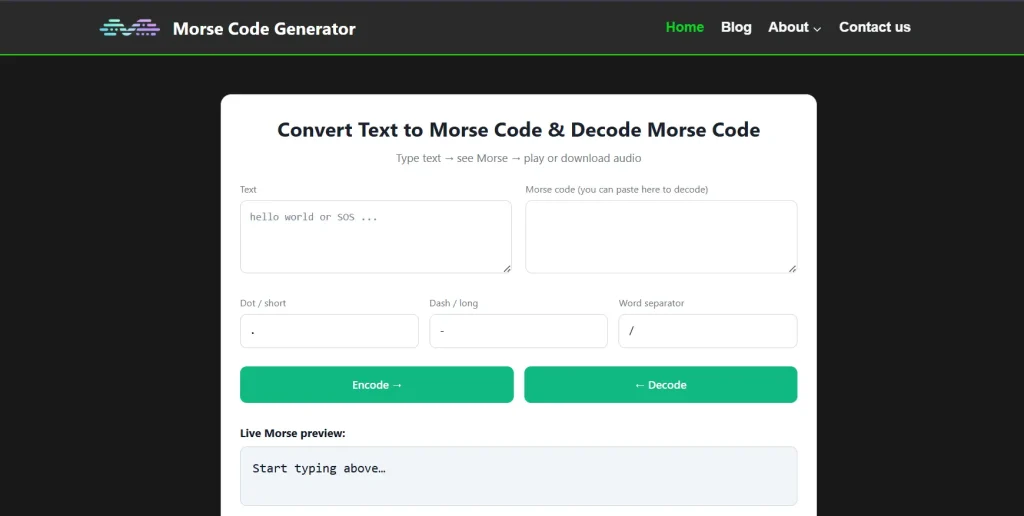
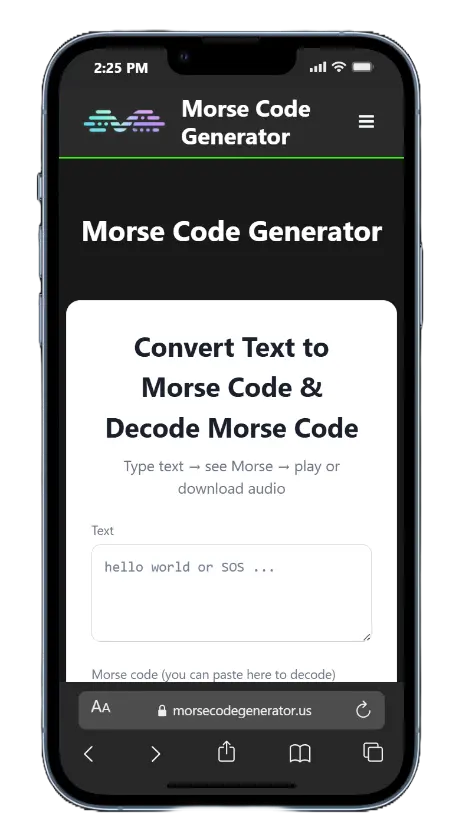
You can even try tools like a Morse Code translator to instantly convert text into Morse and back again. That ease of conversion is actually the first hint that Morse code isn’t designed for security.
When people ask Is Morse code secure for communication, they’re often mixing up encoding with encryption. Those two ideas sound similar, but they’re not the same.
- Encoding changes the format
- Encryption hides the meaning
Morse code only does the first one.
Why Morse Code Feels “Secret” at First
There’s something about dots and dashes that feels mysterious. If you don’t know how to read it, it looks like noise.
For example, if someone sends “HI” in Morse, it becomes something like:
.... ..
If you’ve never seen that before, it might seem impossible to understand. But once you learn even a few patterns—like through guides such as how to say hi in morse code it becomes easy to decode.
That’s the key issue here. Morse code relies on unfamiliarity, not actual security.
So, Is Morse Code Secure for Communication?
Short answer? Not really. Long answer? It depends on what you mean by “secure.” If you’re asking whether Morse code can protect sensitive information from being read by others, the answer is no. Anyone with basic knowledge or even a simple tool can decode it quickly.
So when you think about Is Morse code secure for communication, it’s better to see it as a format, not a protection system.
Morse Code vs Real Encryption
Let’s compare Morse code with actual encryption methods.
Morse Code
- Easy to learn
- Easy to decode
- No key required
- No protection from interception
Encryption (like modern digital security)
- Uses complex algorithms
- Requires a key to decode
- Protects data from unauthorized access
This difference matters a lot. Morse code is closer to writing something in a different alphabet than locking it in a safe.
Situations Where Morse Code Still Works
Even though it’s not secure, Morse code is still useful in certain scenarios.
Emergency Communication
You’ve probably heard of SOS signals. Morse code can be sent using light, sound, or even tapping. People sometimes learn tricks like how to blink in morse code for emergency situations where speaking isn’t possible.
Low-Tech Environments
If you don’t have internet or advanced devices, Morse code can still work. That’s part of its charm—it’s simple and flexible.
Learning and Fun
A lot of people enjoy Morse code as a hobby. It’s a fun way to understand communication systems and patterns.
Where Morse Code Falls Short
Here’s where things get real.
No Privacy
Anyone who knows Morse code can read your message. There’s no built-in confidentiality.
Easy to Decode
Even if someone doesn’t know Morse code, they can use tools to translate it instantly.
No Authentication
You can’t verify who sent the message. There’s no identity protection. These limitations make it clear that Is Morse code secure for communication isn’t just about decoding it’s about the lack of protection overall.
Can You Make Morse Code More Secure?
Now here’s an interesting twist.
You can make Morse code more secure but only by adding extra layers.
Combine with Encryption
Instead of sending plain text in Morse code, encrypt the message first. Then convert it into Morse.
Now you have:
Encrypted text → Morse code
This adds real security.
Use Custom Codes
Some people create their own variations or patterns. It’s not foolproof, but it adds a layer of confusion.
Hide Messages in Patterns
You could mix Morse code into other signals or formats, making it less obvious. Still, even with these tricks, Morse code alone isn’t enough for secure communication.
Real-Life Example
Imagine you send your password in Morse code over a flashlight. It might feel hidden, but anyone nearby who understands Morse or records it can decode it later. Now compare that to sending an encrypted message. Even if someone intercepts it, they can’t read it without the key. That’s the difference.
Common Misconceptions
Let’s clear up a few myths.
“Morse code is like encryption”
Not really. It’s just a different way of writing.
“Only experts can read it”
Not true. Basic Morse code can be learned quickly, and tools make it even easier.
“It’s safe because it’s old”
Age doesn’t equal security. In fact, older systems are often easier to break.
These misunderstandings often lead people to overestimate Morse code security.


A Quick Note on Accuracy
Another thing people ask is whether Morse code has strict rules. For example, convert text to morse code often depends on spacing and timing.
And yes, consistency matters. Even small errors can change meaning.
There’s also the question of case sensitivity. If you’re curious, check topics like is morse code is case sensitive it adds another layer to understanding how messages are interpreted.
Pros of Using Morse Code
Even with its limits, Morse code has some clear advantages.
- Works without internet
- Can be transmitted in many ways (light, sound, touch)
- Easy to learn basics
- Great for emergencies
Cons of Using Morse Code for Security
This is where it struggles.
- No encryption
- Easily decoded
- No privacy protection
- Not suitable for sensitive data
So again, when asking Is Morse code secure for communication, the honest answer leans heavily toward “no” in modern contexts.
When Should You Use Morse Code?
Use it when:
- You need a simple communication method
- You’re in an emergency situation
- You’re learning or experimenting
Avoid it when:
- You’re sharing private information
- Security is important
- You need reliable, protected communication
Final Thoughts
So, Is Morse code secure for communication?
Not on its own. It’s a clever encoding system, but it doesn’t offer real security. It’s easy to decode, widely understood, and lacks any kind of built-in protection. That said, it still has value. It’s reliable, flexible, and sometimes surprisingly useful especially in situations where modern tools aren’t available.
If you want real security, pair Morse code with encryption or use modern secure messaging methods. Think of Morse code as a tool, not a lock. And honestly, that’s part of what makes it interesting. It’s simple, a bit old-school, and still relevant in its own way even if it’s not keeping your secrets safe.